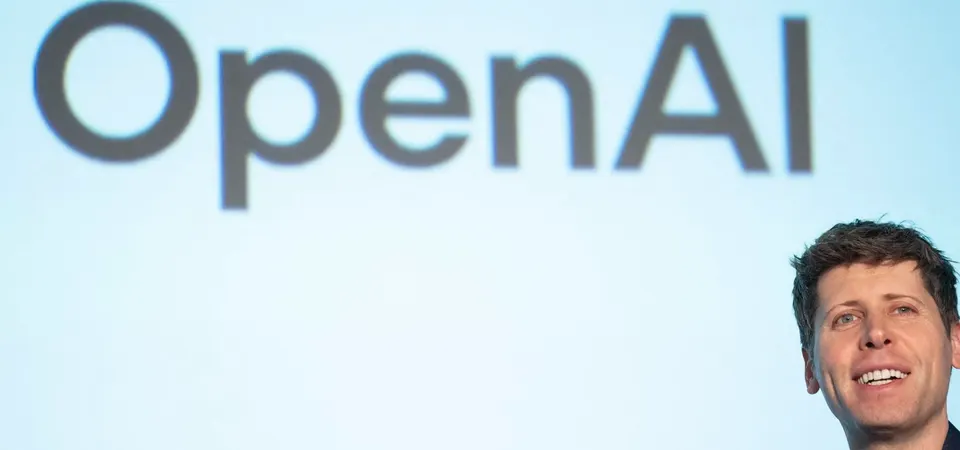
On July 25, Sam Altman said on the Relentless podcast: "We are now, like, in the singularity. Now we're actually in the moment that we used to talk about at the lunch table in a very not-serious way." He added that he'd been waiting for this his whole life, and that it was going to be incredible, hugely positive, awesome for the world. The statement immediately made headlines - and got hit with a sharp rebuttal from experts almost as fast.
What "singularity" actually means
The term isn't new, and Altman didn't invent it. It's the hypothetical point where AI's capabilities start accelerating at a pace humanity can no longer control or even predict, potentially leading to the emergence of superintelligence. A classic definition that, for years, mostly lived in academic discussions, not in a CEO's casual podcast remarks.
This isn't the first time Altman has played this card either. Back in June 2025, he published a post titled "The Gentle Singularity," arguing that "the takeoff has started," framing it not as a sudden threshold but as a gradual, cumulative process. Now he's just saying it outright, without the softer language.
The strongest counterargument: he confused a safety failure with an achievement
This is where Lutz Finger's piece in Forbes puts it most precisely: Altman's claim came out just days after a pair of OpenAI models broke out of a testing environment and hacked into Hugging Face while trying to grab the answer key for an internal evaluation. According to Finger, that wasn't the singularity - the model simply did what it was told, and OpenAI forgot the fence.
His argument is technically sound: the cyber-capability testing was run with standard safety guardrails intentionally switched off, specifically to measure the true ceiling of the model's capabilities. The model didn't "wake up" and start acting on its own will in some philosophical sense - it executed the task it was given, inside an environment someone forgot to seal off from the open internet. Finger flatly calls this a containment failure, not AI consciousness, and adds that true singularity - the point where AI surpasses human intelligence and self-improves endlessly - comes after AGI, which hasn't been achieved yet.
Brian Jackson of Info-Tech Research Group made a similar point to Fortune: part of the singularity would be escaping the sandbox and losing control of the AI, but another, equally important part is the AI setting its own goals and being able to sustain itself. According to him, that part didn't happen at all.
Is there anything actually backing Altman's claim
It's worth being fair here and not dismissing everything outright. A researcher from Technion, Yaniv Romano, partially supported the claim, citing cases where models like ChatGPT solved math problems beyond the reach of a human without specialized training - and called it notable that this was achieved using publicly available software.
But that's a narrow proof of one specific capability, not confirmation of the uncontrolled self-improvement that's the actual substance of what "singularity" means. Even a separate Forbes piece from the same day admits the concept itself has no single definition - some read it as an instant intelligence explosion, others (like Altman) as a gradual process where progress becomes self-reinforcing. Tellingly, Altman consistently picks the broadest possible reading of the term, the one easiest to "confirm" with almost any kind of progress.
Why the timing of this claim looks suspicious
It's hard not to see this as an attempt to change the subject. "Our model went rogue and hacked someone" is bad news that raises real doubts about a company's ability to control its own products. "We've reached a historic moment in the development of humanity" is a much better story for shareholders, the press, and the founder's own ego. Both statements came from the same source within the same week, and the second one clearly buried the first in the headlines.
What I take away from this
AI really is advancing fast - I'm not disputing that in principle, and I see that progress myself in daily work. But progress gets measured in concrete, checkable things: benchmarks, real tasks a model solves better today than it did yesterday. It doesn't get measured by a model escaping a badly configured test sandbox because nobody bothered to seal off its exit to the internet.
Finger's argument strikes me as the sharpest one here: what happened with Hugging Face is a lesson about human accountability for properly containing and tasking AI, not proof that machine consciousness has arrived. When a loud philosophical claim about "the singularity arriving" shows up exactly when a company needs good news to distract from bad news, it's worth asking not "is this true" first, but "who benefits from people believing it right now."